
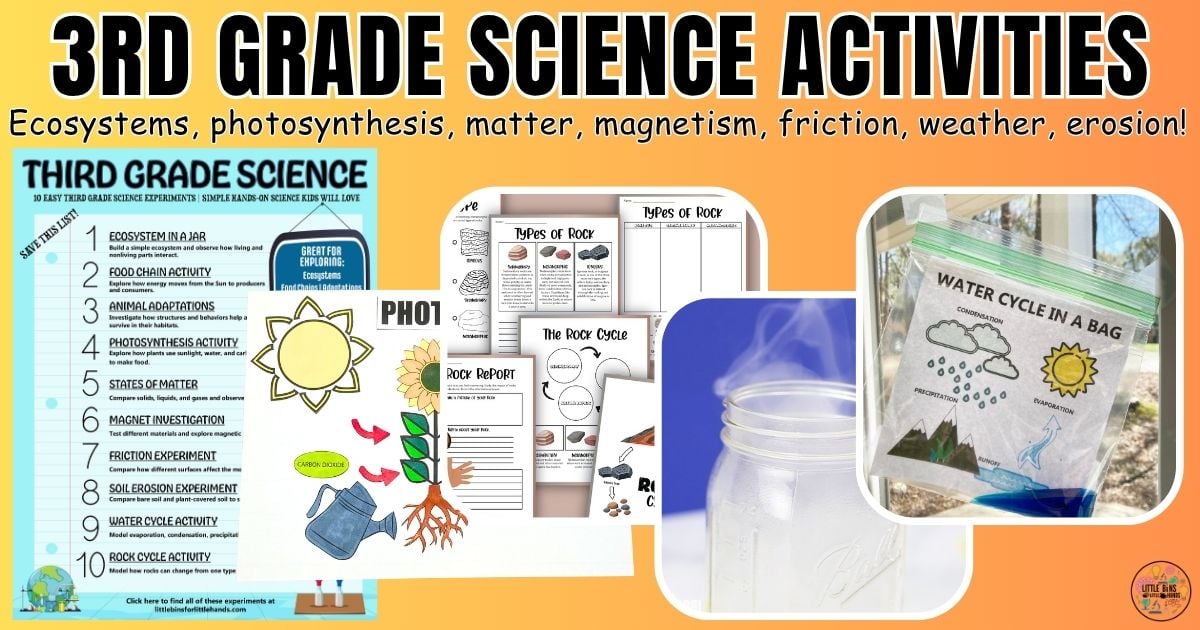
Third grade is a great time to move beyond simple observation and start asking kids to explain what they notice, compare results, use evidence, and build models to understand bigger science ideas.
These third grade science activities cover ecosystems, adaptations, matter, forces, weather, Earth science, and more with hands-on investigations that work well in the classroom, homeschool, or science centers.
Field: Elementary Science
Grades: 3rd Grade
Concepts: Ecosystems, food chains, adaptations, photosynthesis, matter, magnetism, friction, weather, water cycle, erosion, scientific models, data collection
Featured Third Grade Science Activities
Start with these hands-on activities that fit especially well with third grade science.
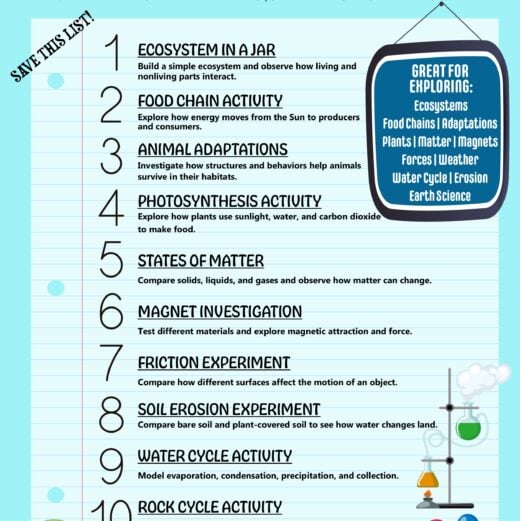
- Ecosystem in a Jar – Build and observe a simple ecosystem to explore how living and nonliving parts interact.
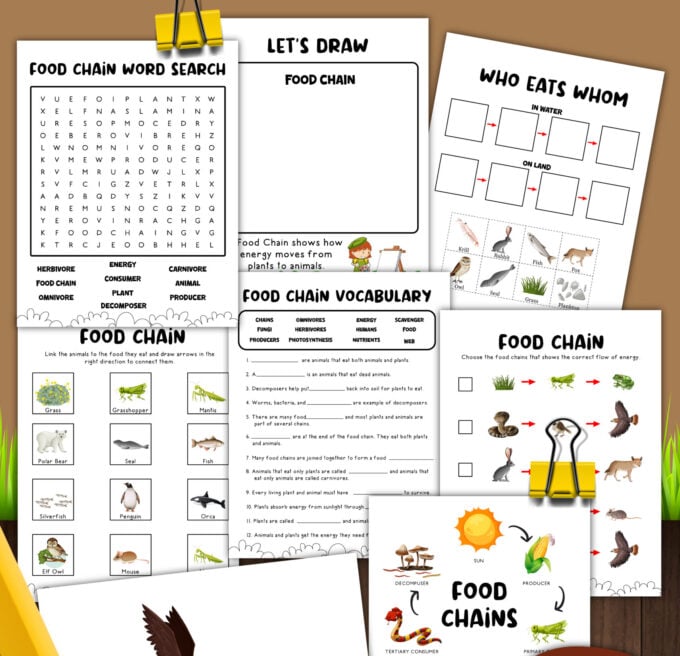
- Food Chain Activity – Model how energy moves from the Sun to producers and consumers.
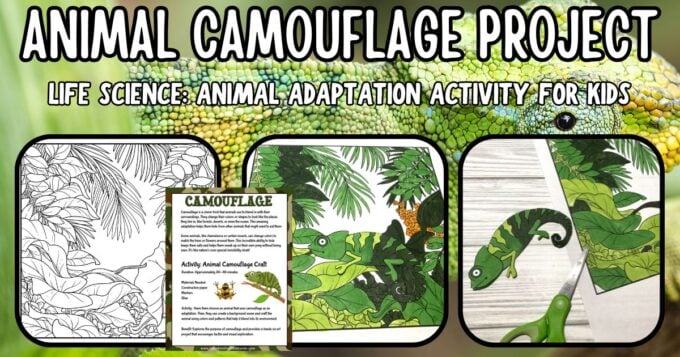
- Animal Adaptations Activity – Explore how structures and behaviors help animals survive in different habitats.
- Photosynthesis Activity – Explore how plants use sunlight, water, and air to make food.
- States of Matter Investigation – Compare solids, liquids, and gases and observe how matter can change.
- Magnet Investigation – Test materials and explore magnetic attraction and force.
- Friction Experiment – Compare how different surfaces affect motion.
- Water Cycle Activity – Model evaporation, condensation, precipitation, and collection.
Free Third Grade Science Starter Guide
Want an easy place to start? Grab the free Third Grade Science Starter Guide with 10 hands-on science ideas, a DIY Ecosystem in a Jar activity, a matching observation page, and reusable science investigation planner pages.
GET THE FREE THIRD GRADE SCIENCE GUIDE →
What Do Third Graders Learn in Science?
Third grade science often asks students to do more than identify, sort, or describe.
Students begin to:
- Explain how living things interact with their environment.
- Explore food chains and simple ecosystem relationships.
- Compare adaptations and survival strategies.
- Investigate matter and physical properties.
- Explore forces, friction, and magnetism.
- Collect weather data and look for patterns.
- Model the water cycle and changes to Earth’s surface.
- Use evidence to explain what happened.
- Record observations and data more carefully.
- Use scientific models to represent systems and processes.
💡 The goal is to move from “What happened?” to “What evidence do I have, and what does it tell me?”
Life Science Activities
Third grade is a strong year for ecosystems, food chains, adaptations, and the relationships between living things.
Ecosystems. Explore how living and nonliving parts of an environment work together. Our Ecosystems for Kids activities include producers, consumers, decomposers, food chains, food webs, biodiversity, and a DIY ecosystem in a jar.
Food chains and food webs. Help kids trace how energy moves from the Sun to plants and then to animals. Start with simple food chains then comparing several connected chains in a food web.
Animal adaptations. Explore how body structures and behaviors help animals find food, stay safe, survive different climates, and live in specific habitats. Third graders can begin explaining how an adaptation helps an animal survive.
Plant adaptations. Compare how plants survive in dry, wet, cold, shady, or sunny environments.
Photosynthesis. Introduce the idea that plants use sunlight, water, and carbon dioxide to make their own food. Connect this to producers and food chains.
Animal classification. Compare major animal groups and explore vertebrates and invertebrates.
Endangered animals. Investigate how habitat loss, pollution, and environmental change can affect animal populations and ecosystems.
Life cycles. Compare how plants and animals grow, reproduce, and change over time.
👉 For more ideas, visit our Life Science Activities and Ecology Activities collections.
Physical Science Activities
Third graders can explore matter, forces, magnetism, friction, and energy through simple testing and comparison.
States of matter. Compare solids, liquids, and gases and observe how heating and cooling can change matter.
Phase changes. Explore melting, freezing, evaporation, and condensation as matter changes from one state to another. Set up our simple evaporation experiment!
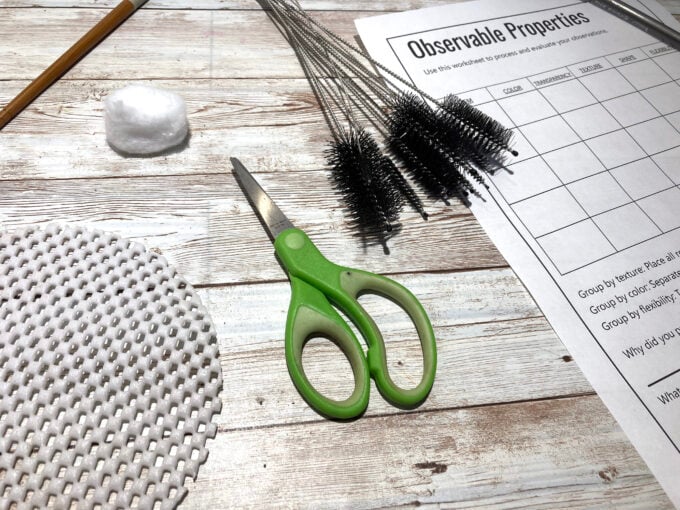
Properties of matter. Compare materials by properties such as hardness, texture, flexibility, absorbency, and magnetism.
Magnetism. Test different materials to determine which are attracted to magnets, and explore how magnetic force can act without direct contact.
Forces and motion. Investigate how pushes, pulls, direction, and surface type affect how objects move.
Energy and motion. Explore how moving objects can transfer energy, and connect this to simple force, friction, and motion investigations.
Friction. Compare how objects move across smooth, rough, soft, or hard surfaces.
👉 Visit our Physics Experiments for Kids for more hands-on physical science ideas.
Earth Science Activities
Third grade Earth science can move from simple observation to patterns, models, and explanations of how Earth changes.
Erosion. Use our Soil Erosion Investigation to compare bare soil with soil protected by plant cover and observe how moving water changes land.
Weather and climate. Collect temperature, wind, cloud, or precipitation data and look for patterns over time. This is a good age to begin comparing daily weather with longer-term climate patterns.
Water cycle. Model evaporation, condensation, precipitation, and collection with a Water Cycle in a Bag, bottle, or other simple model.
Rock cycle. Explore how rocks can change from one type to another over time with a rock cycle model or hands-on activity.
Soil. Compare soil layers and observe differences in texture, color, moisture, and the way water moves through the soil. Make a printable soil layers model
Landforms. Explore mountains, valleys, plains, rivers, canyons, islands, and other landforms with maps and models. (Coming Soon)
Earth’s layers. Introduce the crust, mantle, outer core, and inner core with a simple model. Make a printable Earth Layers Model.
👉 Visit our Earth Science Activities for Kids for more geology, weather, ocean, and space science.
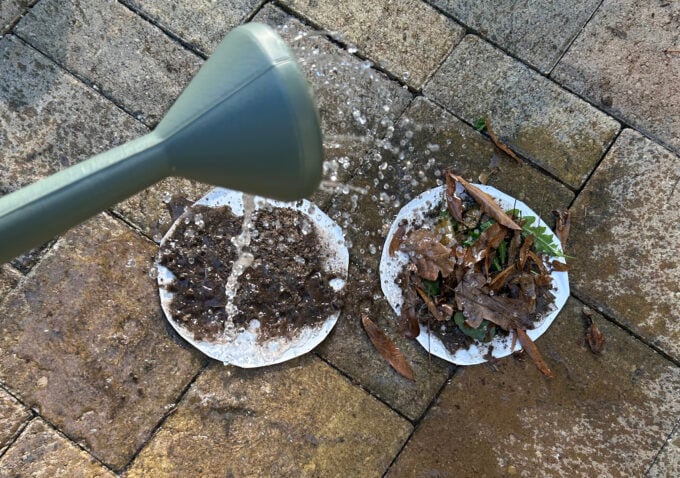
Science Skills for Third Grade
Third graders are ready to use science tools, organize observations, and explain patterns in their results.
- Observation. Encourage students to describe what they see, measure, hear, or notice before jumping to an explanation.
- Science tools. Practice using thermometers, rulers, magnifying glasses, balances, measuring cups, and other tools.
- Recording data. Use simple tables, charts, sketches, and measurements to organize observations. Compare results across several trials or over several days and ask what seems to repeat.
- Scientific models. Use physical models, diagrams, maps, and representations to explore things that are too large, too small, too slow, or too difficult to observe directly.
- Scientific method. Practice asking questions, making predictions, running fair tests, recording observations, and explaining results.
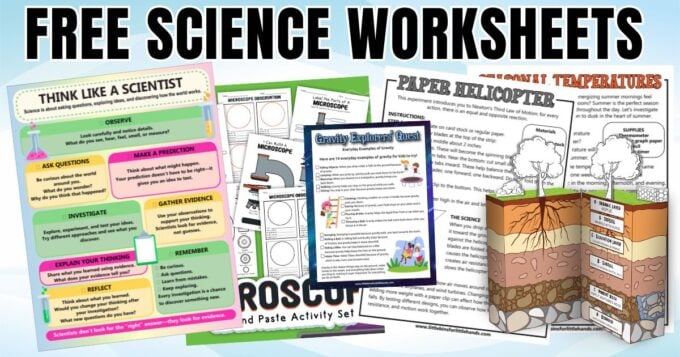
STEM and Engineering for Third Grade
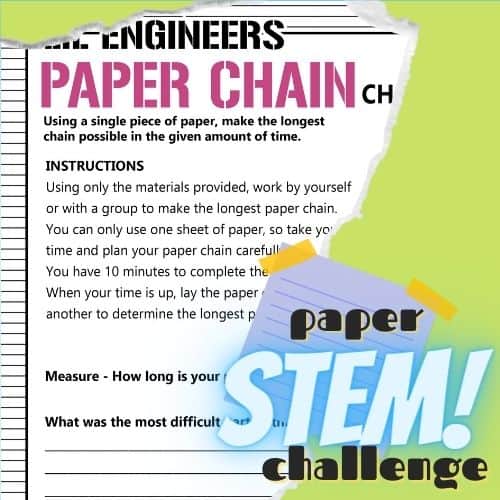
Third grade STEM challenges can ask students to design, test, and improve rather than simply build. This is a fantastic opportunity to learn about the Engineering Design Process!
Try challenges that involve:
- Building a structure that can hold weight.
- Designing a bridge or tower.
- Testing materials for a specific purpose.
- Creating a device that moves using wind or another force.
- Building a model of an Earth system.
- Improving a design after the first test.
Encourage students to explain why they chose a material or design and what they would change after testing it.
👉 Explore Elementary STEM Activities and Engineering Projects here.
Third Grade Science FAQ
What science topics do third graders learn?
Third grade science commonly includes ecosystems, adaptations, food chains, matter, forces, magnetism, weather, the water cycle, erosion, and Earth science.
What are good science experiments for third graders?
Good choices include ecosystem models, food chain activities, erosion experiments, magnet investigations, friction tests, states of matter activities, and water cycle models.
How is third grade science different from second grade science?
Third graders are usually asked to explain more of what they observe. Instead of only identifying a feature or change, they can compare evidence, look for patterns, and explain how or why something happens.
Can third graders learn about ecosystems?
Yes. Third grade is a great time to introduce ecosystems, food chains, food webs, producers, consumers, decomposers, and adaptations.
Can third graders learn about photosynthesis?
Yes. Keep the explanation simple and connect photosynthesis to plants as producers in food chains and ecosystems.
Can third graders learn about Earth’s layers?
Yes. A simple introduction to the crust, mantle, outer core, and inner core works well in third grade. More detailed plate tectonics can come later.
Printable Elementary Science!
Want to do meaningful science — but not start a full unit yet? This starter lab provides quick, hands-on investigations across multiple science topics, allowing students to explore how science works before diving deeper into any one subject.
Perfect for regularly trying science without extensive planning. Grades: K–5.